

On Training
Sandbags, jiu jitsu, parenting, the Tao; roast chicken.

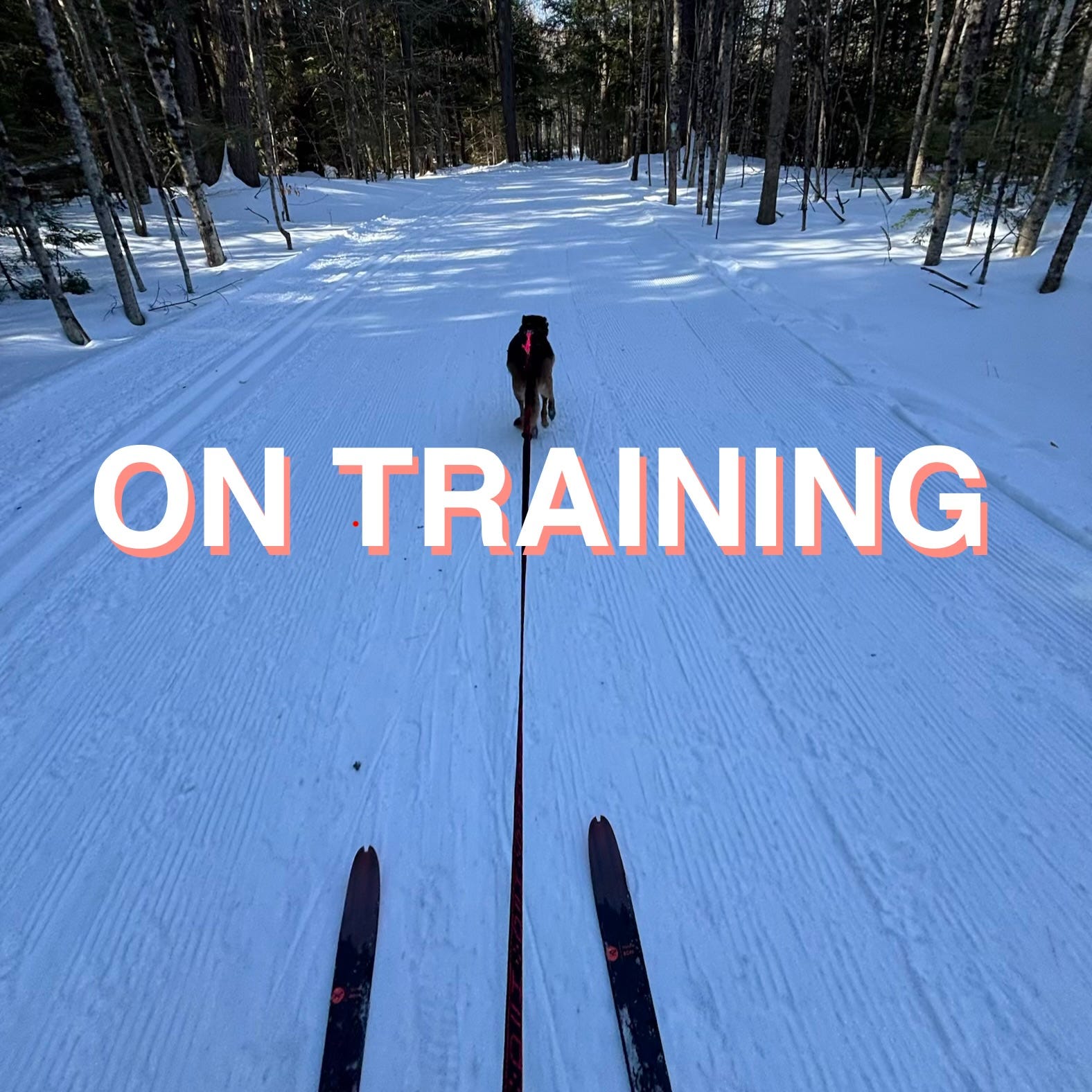
Was doing sandbag get-ups the other morning, a lovely exercise. Eighty pounds of deadweight draped across my chest and shoulder, me trying to get up. As I tried to rise for my last rep — I couldn’t. Stuck to the ground, the weight pressing downward. I tried to toss, to turn, to rotate, to do anything to stand up. I was still struggling when the timer went off — the set over.
I lay on my back, my head on the bag, breathing, thinking, I should train more.
***
I’ve been training jiu jitsu for a little over a year now.1 I like to think I have some degree of competence. But, more so than technical prowess — mine is middling — I get by primarily through athleticism and grit. I don’t say this to brag, but instead as an admonition to myself to train more purposefully. Still, though, there is something to be said about strength and stupidity: I very rarely tap to pressure.2
As I was driving back from the gym the other day, trying to work the kinks out of an abused neck, I wondered to myself — what is it that drives this comfort in discomfort? An accumulation of tens of thousands of hours of prior training, of pushing up against that razor’s edge of limitation, of falling, failing, pushing up against it again? Was it education through osmosis, the stories of grit and vigor and perseverance passing through my brain and into my blood? Something else? I recall reading Sam Alaimo writing about the Mandan Indian Okipa initiation and thinking to myself, yes! What causes that? I recall a set of 10x200s, just after I started swimming again, training for a race, getting to the last 200, feeling the lactic acid circulating through my body, limbs heavy, a piano on my back, metal in my mouth, gritting my teeth, smiling, thinking to myself, boy, did I miss this!
What causes that?
***
A confluence of factors, I’m sure. But, probably, training.
***
There’s a quote that’s likely misattributed to Julius Caesar that goes something like, “Without training, they lacked knowledge; without knowledge they lacked confidence; without confidence, they lacked victory.” Regardless of the provenance, the idea stands. And even absent victory, training leads, inevitably, to a willingness to act. To withstand a choke, to wrestle back up, to push one more mile, fifty more yards, to pull a trigger, to take a life. To be confident. It’s not the skill or the knowledge but the action that matters — and the ability to recognize when to take action, or to not.
***
This is true for other things.
***
Like parenting.
***
Like when I get frustrated. Intellectually, I know, for my own children, a scream or a shout or an outburst does nothing, exacerbates the situation. But selfishly it functions as a release valve — in Kyle Shepard’s words, it’s a vice. Something I know I shouldn’t do, but I do anyway.
In that moment, again, is the imperative to act — when, rather, I should remain passive. The Tao: “The Master doesn’t try to be powerful; / thus he is truly powerful. / The ordinary man keeps reaching for power; / thus he never has enough.” It’s an imperative to rise above my baser instincts, to not let emotions dictate my response. It’s the Stoicism preached by Seneca and Epictetus and Marcus Aurelius — the striving for areté not cold dispassion. It’s the ability to remain calm under pressure, under fire, to seek good, seek kindness, seek excellence — and to not succumb to pathē, the “disturbing emotions.”
And despite the seeming impossibility of this state, when you have a child crying, another screaming, a third you can’t put down — to say nothing of the dinners that aren’t being eaten or the dishes which need to be cleaned or the dog who demands to be acknowledged — that state can in fact be nurtured. It can be trained. You can stoke that little, inner, celestial fire, train it not to flicker with each gust. You can do it with physical training — pushing yourself to the very brink — and you can do it with mental training — by devouring the Stoics and the lamas and the mystics and the elders.
But it doesn’t come naturally (at least not to me) — you need to be diligent.
***
Burkey wrote about wall squats recently. I hadn’t heard of them, but they’re nearly exactly as they sound: you stand facing a wall and squat. Knees can’t extend over toes, torso can’t counterbalance, hips can’t flare. There is no compensation. I’ve been doing them most mornings, as a warm-up to my workout. The first time I tried one, I fell three times before I completed a rep. And, very quickly, I figured out why Burkey likes them so much — they’re all about paying attention. They’re about finding the “failure point,” about tuning in to the “physical… mnemonic device” that is exercise. They’re about sitting with “a very deliberate and specific problem” and challenging it. They’re about diligence.
With each topple, these squats act as a barometer for my readiness, my internal proprioception, my own willingness to sit with discomfort. And that translates far beyond the box squats and get-ups and farmer’s carries that fill out the rest of the morning.
***
Gary Snyder writes that “there is learning and training which goes with the grain of things as well as against it.” He recounts that in “Chinese Daoism, ‘training’ did not mean to cultivate the wildness out of oneself, but [instead] to do away with arbitrary and delusive conditioning.” So equally I struggle against a sandbag — against literal grains — and let the current of the water guide my direction. “Arbitrary and delusive” outbursts are recognized, done away with as best I can. I train my breath so I can breathe, I train my mind so I can pay mind. In this way, training “helps us realize our own true nature” just as much as it shapes it. We cultivate our own “private vows.”

Kiddos have been off this week, it being February break. Midweek, we decamped North to try and catch a few days on mountain time, giving the beautiful savages their first tastes of organized snow sports. “Great endurance,” The Warthog’s instructor said after his first lesson yesterday; Kiddo’s remarked how after she fell, she always got back up. The training continues today and tomorrow — never ends, really.
With the hustle and bustle of the madness, didn’t have much time for extravagant cooking; instead, earlier this week bought a whole chicken from the farm, basted it, roasted it, broke it down and ate it in quarters off the cutting board, no time to prep sides or accompaniments. If you’re feeling so inclined, here’s how you might do the same.

Slather a whole chicken — pasture-raised, not too big, with muscles that have been used — with a combination of salt, pepper, garlic, a mix of butter and maple syrup and soy sauce, and then let it rest in a bowl. Heat your oven — or a grill — to somewhere in the vicinity of 350°F and then let the chicken cook for an hour or so, checking the temperature periodically. As it nears 150°F at the thickest part of the breast, crank the heat upwards of 400°F, letting the skin crackle and crisp and turn an lacquered shade of brown. Remove the chicken at 150°F — another thirty minutes, I’ve found, roughly — when the juices run clear (it will continue to cook while resting.)
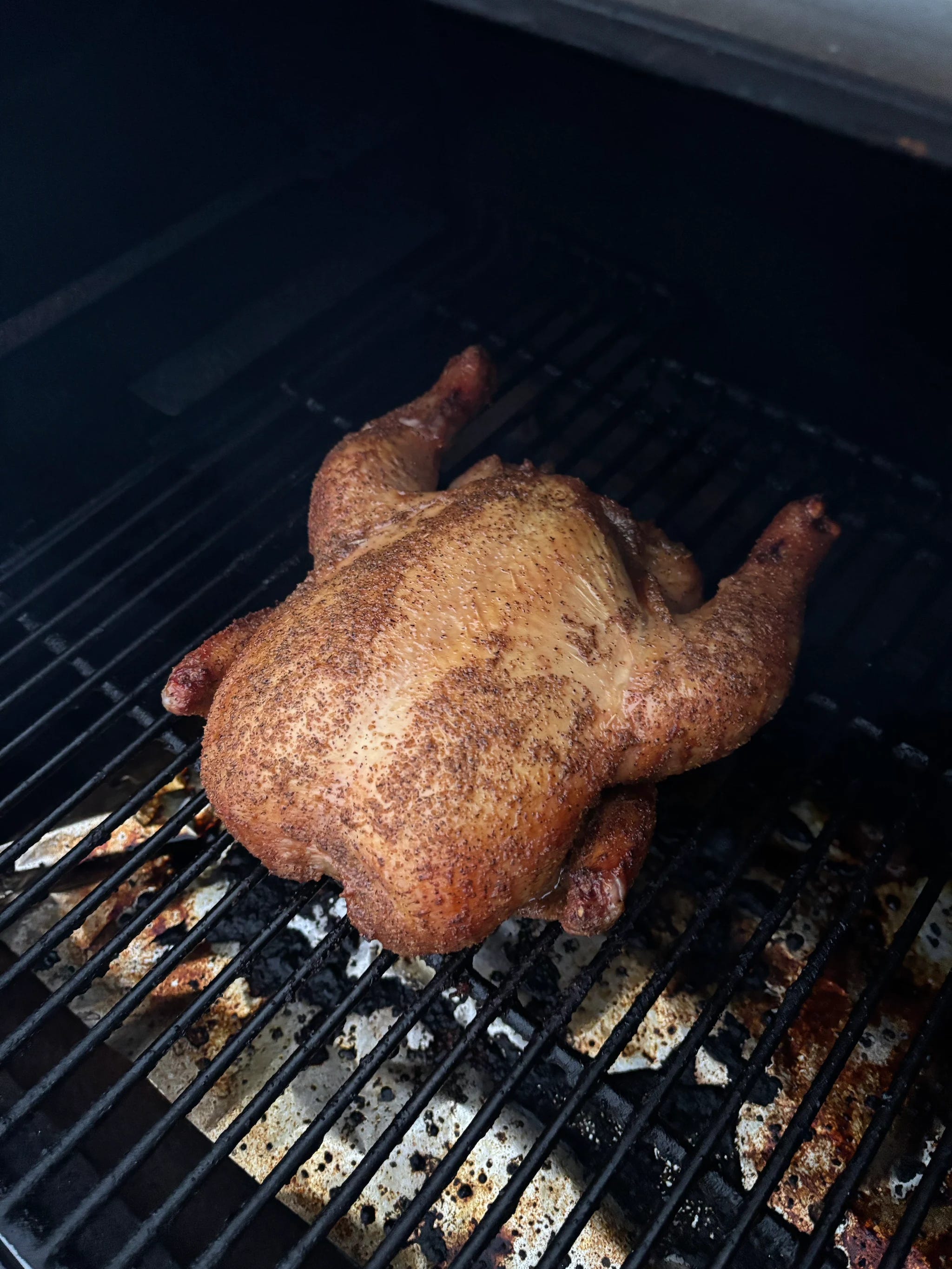
Potatoes would go well here, roasted veggies, too — but it’s just as good alone, the skin eaten like a potato chip.
So there you go folks, roasted chicken, simple pleasures. We’ll be enjoying another few days on the slopes before heading back home, heading back to normalcy. March is right around the corner, and spring after that. Start getting ready.
If you’re not skiing or otherwise preoccupied with the four children and two dogs of two families trying to manage a long weekend, you might enjoy reading this conversation I had with Stacy Boone as we both read Renata Golden’s book, Mountain Time.
We’ll see you back here next week.
I’ve been “training” in the broader sense for much longer than that of course — made a young whippersnapper laugh the other day when he found out I had been lifting weights for longer than he’s been alive. How’s that to make you feel old?
Because of this, I’ve come home more than once and had Mrs. CWD tell me I look like I got into a bar fight — mat burn, scratches, black eyes. I have a friend — a lawyer — who told me as a young associate he had to stop rolling because the partners at the firm were aghast at the bruises that bloomed up past his collar line.
Adding wall squats to the list! What a great exercise for my favorite writer on attention! Haha. This entire piece resonated deeply with me brother. Much overlap in our lives and perspectives on training, parenting, and living. This will need to be a bonus chapter when you release your second edition of “Some Meat I’ve Known.”
Excellent musing, Lou. The whole time you were working through this, I realized the worst thing that can is not having this inner dialogue, but never having it at all.